Velaria umbrosa
The Wane Palm
- Last seen
- 1871, cloud terraces of the Cormorin Atolls
- Returned
- 1934, east transept, pane 212
- Habit
- Opens its crown only while the moon is thinning; folds flat at the quarter and sulks.
A conservatory of extinct flora, grown back as ghosts.
Est. 1874 · Rebuilt in Fog 1931
The House
Under nine hundred panes of breathing glass, the Palmhouse keeps the only collection of its kind: plants the world has finished with, returned in silhouette.
They are not specimens and they are not projections. A ghost-plant is a habit of light that remembers being a plant — it photosynthesises nothing, drinks only condensation, and casts a shadow slightly greener than it should. Our gardeners raise them from seed-memories in the fog beds below the floor, and when a ghost is ready it climbs its old shape pane by pane, the way ivy remembers a wall that has been torn down.
We ask visitors to walk slowly, speak in the humid register, and touch nothing. Not because the ghosts are fragile. Because you are, and they remember what hands did.
Nine gardeners keep the house. None will tell you which of the residents they raised, and none will confirm that a tenth collection does not exist below the one you are permitted to see.
The Living Catalog
Accession notes from the head gardener's ledger. "Last seen" records the final confirmed living specimen; "returned" records first manifestation under glass.
The Wane Palm
The Nightwalking Fern
The Lantern Vine
The Glasshouse Moss
The Sailcrown
The Hourflower
Method
The practice has not changed since 1931. It is slow, it is humid, and it fails more often than it works — which is how we know it is gardening.
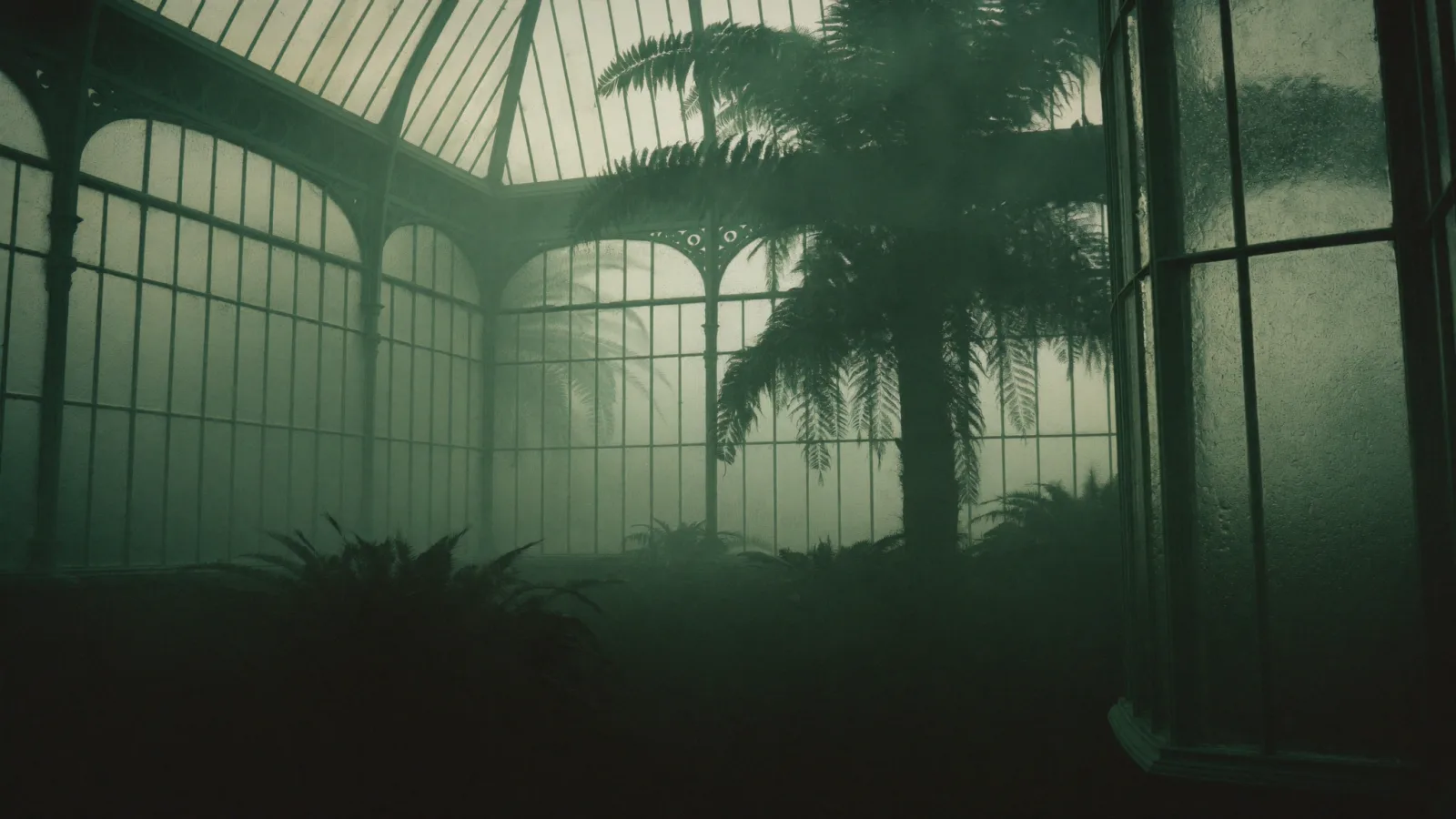
A pressed leaf, a botanist's sketch, a sailor's complaint about the smell. Anything a plant left behind holds a little of its habit. These are steeped in rainwater collected during weather the plant would have known.
The steeped memory is bedded in troughs of permanent pre-dawn fog. Nothing visible happens for months. Gardeners read aloud from shipping forecasts, which the beds seem to prefer to silence.
One morning the fog above a bed will be standing in the shape of a seedling. It must not be looked at directly for the first week; peripheral vision is the only soil young ghosts can root in.
A ready ghost leaves its bed at night and climbs into the house proper, condensing on each pane as it passes. From then on it is watered by the roof's own breath, and it belongs to the collection — for as long as it chooses to be remembered.
Visiting
| Ordinary nights | One hour after sunset until one hour before sunrise |
| Waning moons | Extended hours; the Wane Palm receives |
| Dry spells | Closed. The ghosts thin badly below 80% humidity |
| Admission | One true story about something you have lost, told to the porter |
| Party size | Six or fewer; ghosts miscount larger groups and become anxious |